Baby Sign Language in Italy - Lingua dei Segni Italiana (LSI)
Get your Baby Sign Language Charts!
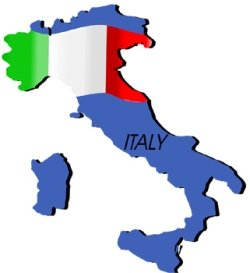
Like many sign systems around the world, Lingua dei Segni Italiana (Italian Sign Language or L.S.I.) is gaining recognition with citizens in Italy regardless of hearing capabilities.
LSI has been used by the Italian Deaf Community for hundreds of years, just as Italian has been spoken for many years. It has not been until recently, however, that Lingua dei Segni Italiana has been studied as a true language. For many years, people have thought that every sign language was gestural and not a full language. Even with so many people using this language, the Italian government has yet to recognize LSI as an actual language.
However, starting in the 1980's, thorough analysis has begun to prove that LSI does indeed have lingual and grammatical structure, which would make it equal to any spoken language. The analysis of LSI was done in the same manner of sign language pioneer William Stokoe, who was the first to identify linguistic parameters in American Sign Language in the 1960's.
Though the popularity for Lingua dei Segni Italiana may not be explosive here in the United States, this language is widely used in Italy. There are approximately 50,000 Deaf people in Italy today, who have a spectrum of fluency of the language. Although there are linguistic differences in different regions, fluent signers can understand signers from all over the country.
One example showing structure in LSI is in the syntax. In
English, sentences tend to be set up subject, verb, and object. For
example: My son goes to college. In LSI, it is slightly different. LSI
is set up in a subject, object, and verb order: My son college goes.
Different languages have different word orders. Just as in Spanish, the
adjective comes before the noun, whereas in English, it's the opposite
(i.e. you would say car blue, not blue car in Spanish).

People without hearing loss are also learning LSI as a second or third language for different reasons. Perhaps a Deaf family member; coming across the language in their studies; or an interpreter or teacher of the Deaf (or striving to be!). With these added users of Italian Sign Language, the number of LSI signers jumps to 170,000.
As you can see, your baby in Italy has amazing benefits to learning sign language, too!
There are books available for purchase, but can also be a challenge to find. With the awareness that LSI is not documented enough on the internet, many organizations are now trying to remedy that.
Here is a helpful site link that explains LSI in English and provides some external resources:
http://en.wikipedia.org/wiki/Italian_Sign_Language
Despite the moderately rising recognition of Lingua dei Segni Italiana inside Italy and out, it is truly its own language. With the help of educational foundations and research making it accessible online, LSI will be understood, accepted, and available to all hopefully within a few short years.
Return from "Italian Sign Language" to "Baby Sign Language" homepage